Artificial Intelligence in Education: How Schools Are Using AI to Teach Better
· 4 min read
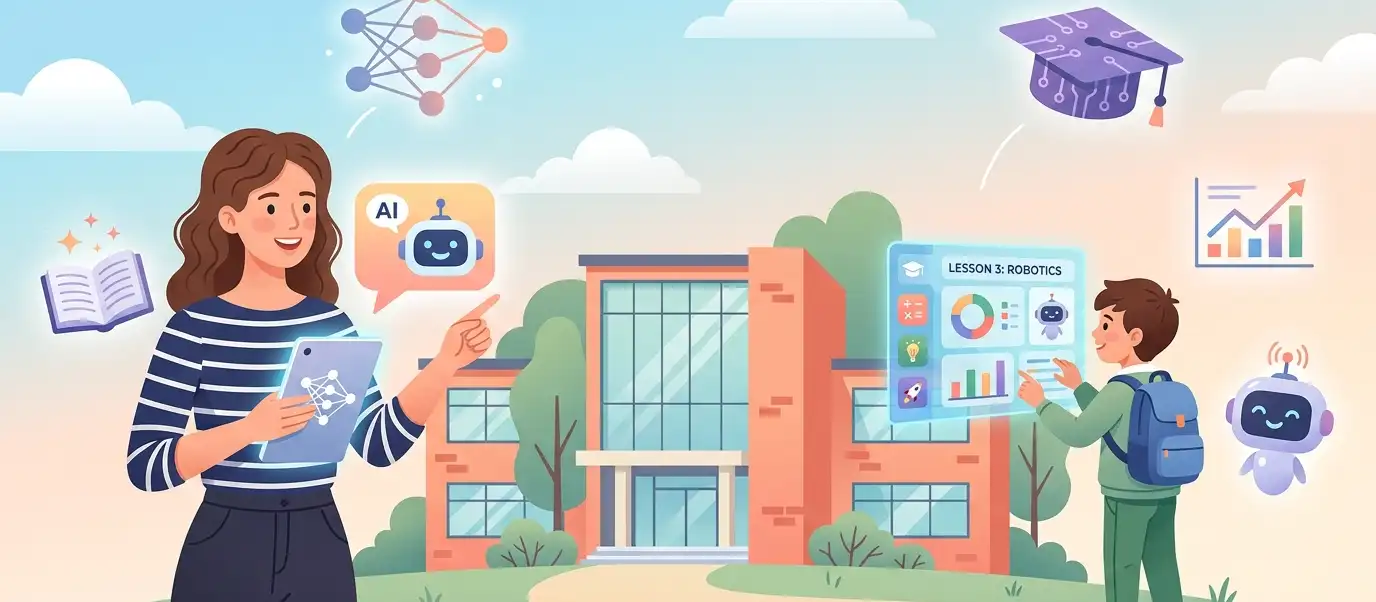
Artificial intelligence has moved from science fiction to classroom reality. From adaptive platforms that adjust each student's learning pace to systems that help teachers create assessments, AI is redefining what's possible in K-12 education.
For private school administrators, understanding what AI can — and cannot — do for their institution is a strategic question. In this article, we explore the main practical applications, the most adopted tools worldwide, the risks that need to be managed, and how intelligent technology is already present in the operational management of the most advanced schools.
What AI Already Does in Schools Today
Adaptive Learning
Adaptive learning platforms use algorithms to identify each student's knowledge gaps and adjust content in real time. Instead of one pace for the entire class, each student receives the next challenge at the right level. Khan Academy, Duolingo, and various regional edtech platforms are widely adopted examples.
Teaching Assistants and Content Generation
Tools like ChatGPT (OpenAI) and Gemini (Google) are being used by teachers to generate lesson plans, create assessment questions, adapt content for different levels, and provide automatic feedback on essays. Platforms like Canva Edu and Microsoft Copilot for Education integrate AI directly into the teaching workflow.
Predictive Analytics and Educational Data
More advanced school management systems use AI to identify students at risk of dropping out, predict learning difficulties, and recommend preventive interventions. Data analytics is being increasingly incorporated into educational platforms worldwide.
Operational Process Automation
AI also works outside the classroom: in enrollment document screening, automated family support via chatbot, tuition default analysis, and — increasingly — in student dismissal flow management. Automating operational processes frees school staff to focus on what truly matters: the relationship with students and families.
Reflection for administrators: AI doesn't replace teachers — it amplifies what good teachers do. The real risk isn't AI itself, but adopting tools without understanding how they handle student data. Data protection compliance is a prerequisite, not optional.
AI in Student Dismissal Management: The Next Step
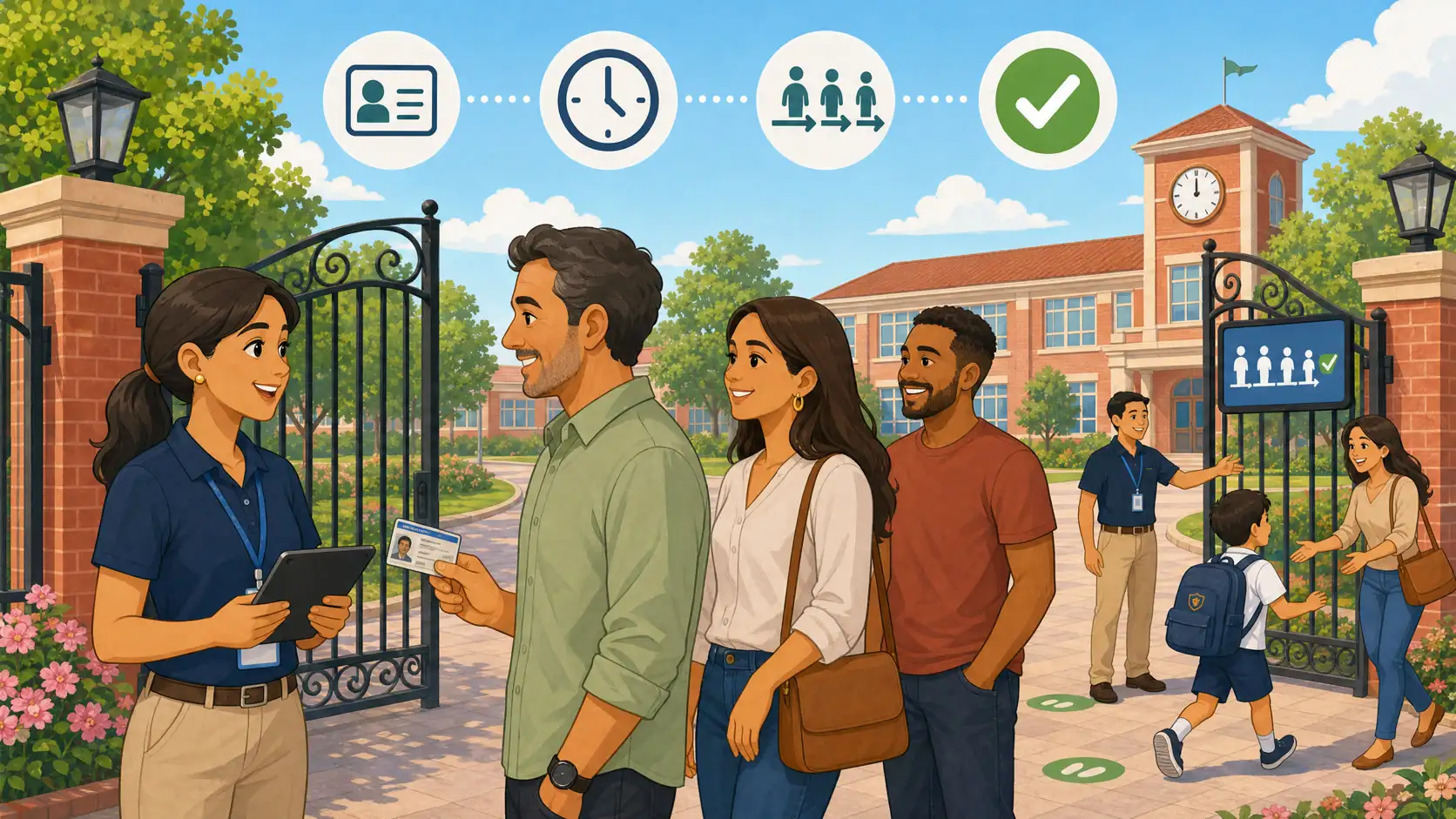
One of the most promising AI applications in school operations is dismissal flow prediction. Intelligent systems can analyze historical patterns of family arrival times and automatically distribute student calls to optimize flow — eliminating peak congestion without manual intervention.
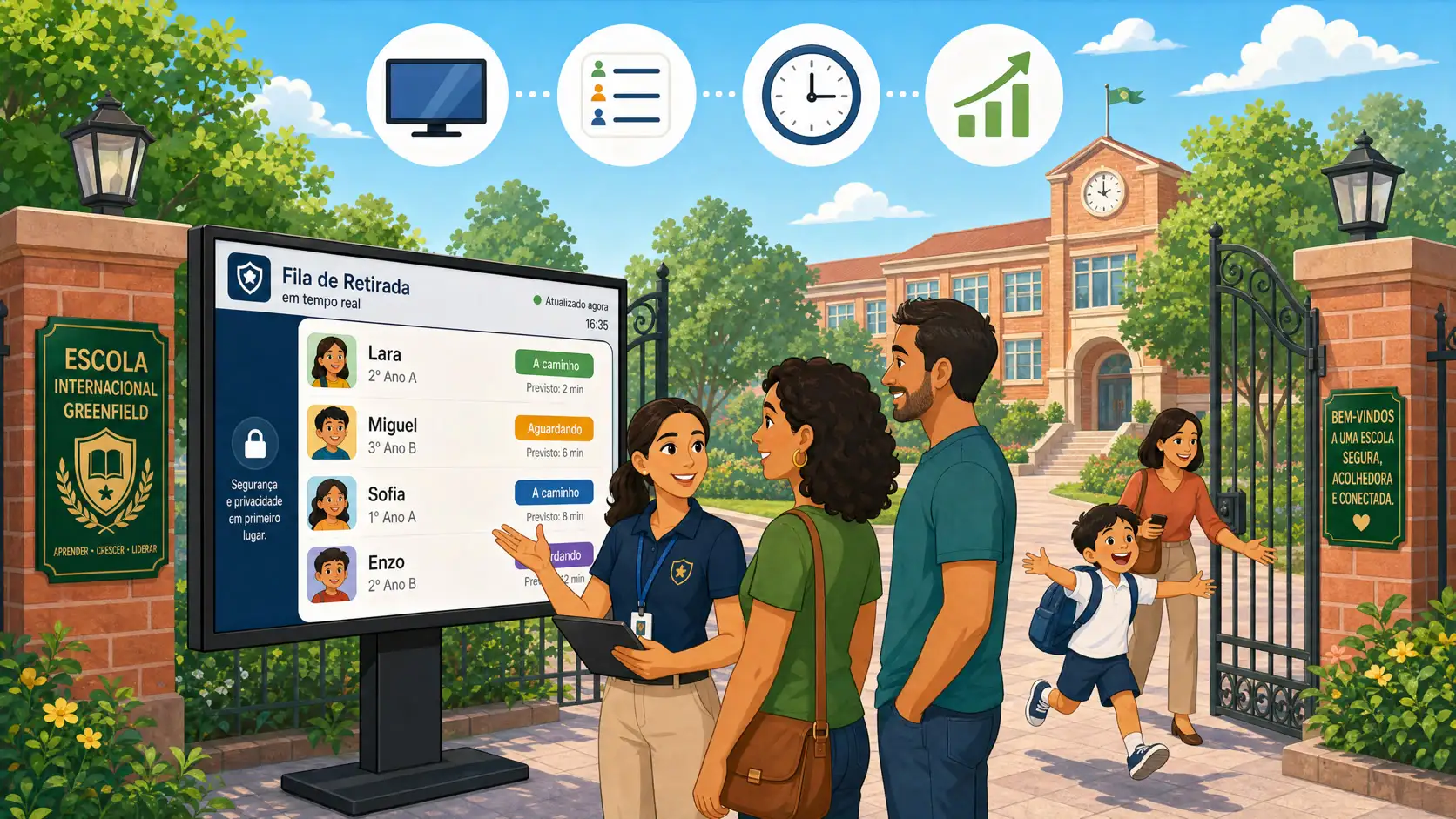
Kidsflow already works with a real-time dashboard and early call based on a digitized queue. The next natural evolution is incorporating AI-powered flow prediction, which will allow schools to anticipate bottlenecks before they happen. More efficiency, shorter lines, better experience for families.
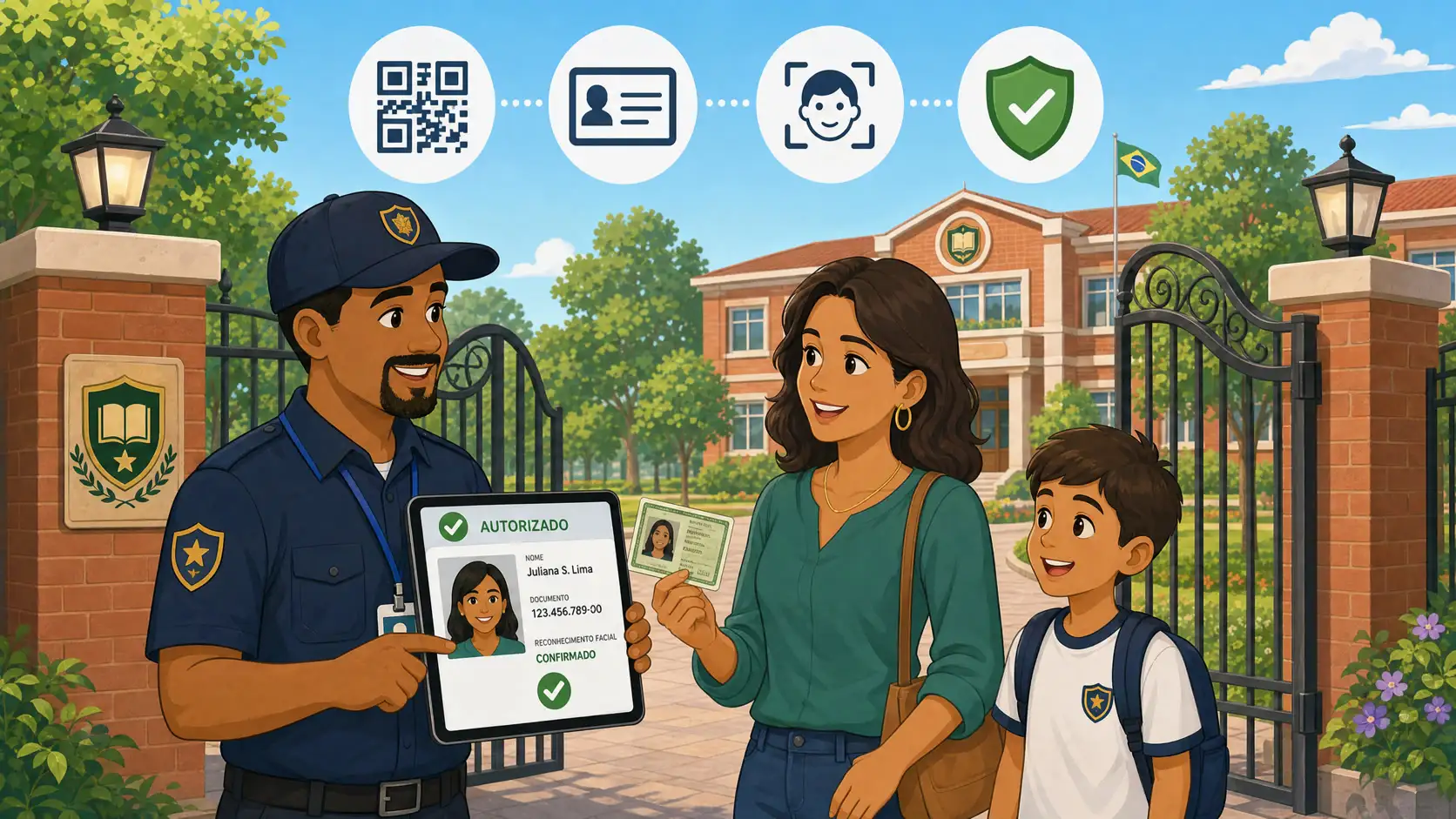
Learn about Kidsflow at www.kidsflow.com.br. For live cameras with intelligent access control, check out AlunoTV at www.alunotv.com.br.
Risks and Responsibilities in Using AI at Schools
- Data privacy: every AI tool that processes student data must be evaluated for data protection compliance before adoption
- Algorithmic bias: AI systems can reproduce and amplify inequalities if not critically monitored
- Technology dependency: schools need contingency plans for when systems fail
- Teacher digital literacy: the most advanced tool is useless without adequate team training
- Transparency with families: parents need to know which of their children's data is processed by AI
Frequently Asked Questions (FAQ)
Will artificial intelligence replace teachers?
No. AI is a tool that amplifies teachers' capabilities — it doesn't replace the human relationship, emotional bond, and pedagogical judgment that are essential in the educational process. What changes is the teacher's role: from content transmitter to learning mediator, with more time freed from operational tasks.
Which AI tools are most accessible for small schools?
Canva Edu (AI-powered material creation), Khan Academy (free adaptive learning), ChatGPT (teacher support for content creation), Google Gemini, and Microsoft Copilot (integrated into tools many schools already use). All have free or low-cost versions.
How to ensure AI use complies with data protection laws?
Before adopting any AI tool that processes student data, the school should: review the platform's privacy policy, confirm data is processed in compliant jurisdictions, obtain guardian consent when necessary, and include the tool in the school's data processing activity records.
Can AI help with school operational management, beyond pedagogy?
Yes, and this is often where the immediate impact is greatest. Family communication automation, document screening, default analysis, dismissal flow prediction, and schedule optimization are already available applications. Kidsflow, for example, uses real-time data from family arrival patterns to organize dismissal intelligently.
What is adaptive learning and how does it work in practice?
Adaptive learning uses algorithms to adjust content and teaching pace to each student's individual needs. In practice, the system identifies where the student is struggling most, which concepts haven't been consolidated, and presents exercises at the right level — neither too easy nor too hard. The result is more efficient and less frustrating learning.