Digital Child Protection Laws: What Schools Must Know in the Digital Age
· 4 min read
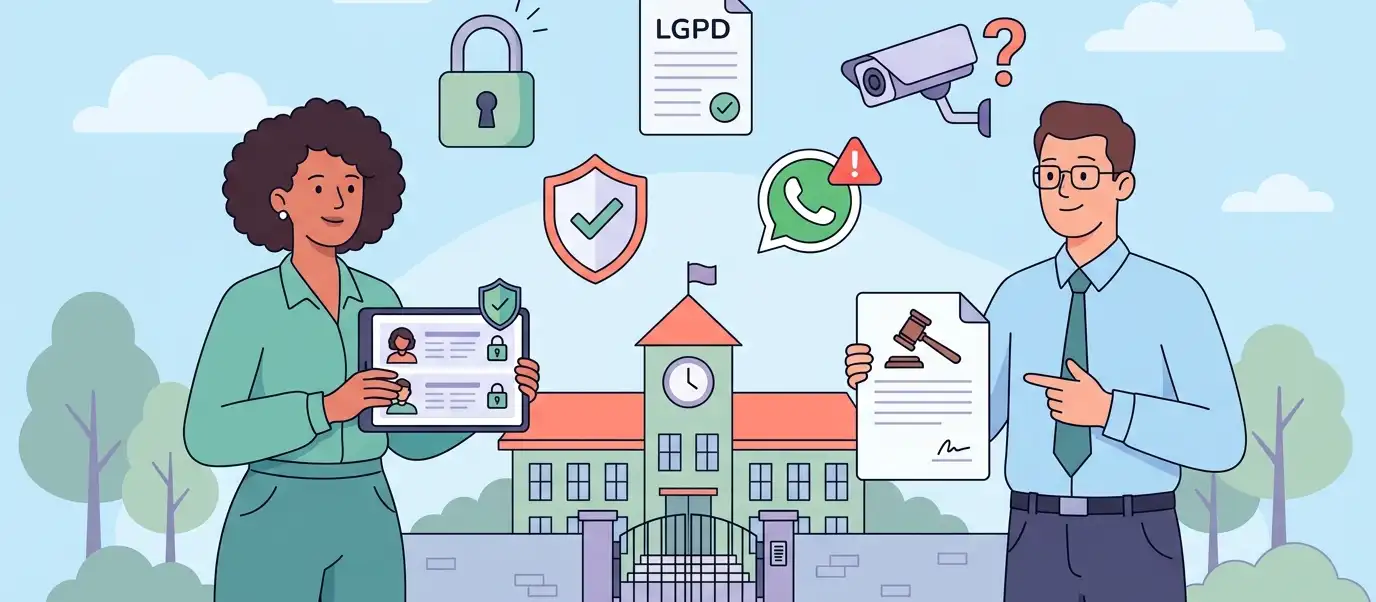
The digital transformation has reached schools — and with it came new legal obligations that many administrators still overlook. Child protection statutes, combined with data protection laws and internet regulations, create a framework of rules governing children's rights in digital environments and imposing direct responsibilities on educational institutions.
For private schools, ignoring this legislation is not just a legal risk — it's a failure of care toward students that can have irreversible consequences. In this article, we explain what the law requires, where schools are most vulnerable, and how technology can be an ally — not an enemy — of legal compliance.
What Are Digital Child Protection Laws?
Digital child protection doesn't refer to a single law, but to the legal framework that applies child protection principles to digital environments. Combined with data protection regulations and internet governance laws, it establishes a comprehensive protection framework for children and adolescents that extends to the virtual space.
In practice, this means schools have obligations beyond the physical environment: they must protect student data, ensure images and personal information are not used without guardian authorization, and adopt proactive measures to prevent digital harm.
The 4 Legal Pillars Schools Must Understand
1. Child Protection — Comprehensive Coverage in Digital Environments
Child protection laws guarantee children's right to image privacy and establish the active duty to prevent threats — extending to digital spaces. Schools that collect, store, or share student images and data without formal protocols are non-compliant.
2. Data Protection — Student Data Is Sensitive Data
Data protection regulations classify children's data as belonging to vulnerable subjects, requiring specific consent from guardians for any processing. Student photos, dismissal records, biometric data, and health information need explicit legal basis, secure storage, and controlled access.
3. Internet Regulations — Responsibility for the Digital Environment
Internet governance frameworks establish that platforms and institutions collecting user data are responsible for its proper use. For schools using apps, management systems, and communication platforms, this means evaluating each digital tool for compliance before adoption.
4. Civil Liability — Strict Responsibility
Civil law holds educational institutions liable for damages that occur under their supervision — including damages caused by improper use of student data or images. The liability is strict: it is sufficient that harm exists and that the school failed to adopt adequate preventive measures.
Key warning: Sharing student photos in WhatsApp groups, social media, or systems without guardian authorization is a direct violation of child protection and data protection laws — regardless of intent. Many schools do this daily without realizing the risk.
The Biggest Digital Vulnerabilities in Schools Today
- Using WhatsApp to communicate dismissal authorizations — no formal record, no identity verification
- Student photos shared on social media without specific image use authorization
- School management systems without data protection compliance assessment
- Surveillance cameras without access and retention policies
- Student data stored in spreadsheets without encryption or access controls
- No Data Protection Officer (DPO) or internal privacy policy
How Kidsflow Helps with Legal Compliance
Student dismissal management is one of the areas of greatest legal exposure for schools — and one of the least digitized. Kidsflow was built with legal compliance as a premise: all student and guardian data is processed under contract, stored with end-to-end encryption, and accessed only by school-authorized personnel.
Each dismissal authorization is digitally recorded with guardian identification, timestamp, and staff confirmation — creating an auditable trail that replaces WhatsApp and printed lists. In case of legal challenge, the school has complete documentation for its defense.
Learn more at www.kidsflow.com.br. For school cameras compliant with data protection laws, check out AlunoTV at www.alunotv.com.br — a live streaming solution for schools that legally protects image usage.
Frequently Asked Questions (FAQ)
What are digital child protection laws and how do they apply to schools?
Digital child protection refers to the legal framework that applies child protection principles to online environments, combined with data protection and internet regulations. For schools, it establishes obligations to protect student data, use images only with authorization, and proactively prevent digital harm.
Does the school need authorization to photograph students?
Yes. Using images of children and adolescents requires specific authorization from legal guardians. This authorization must be in writing, state the purpose of use, and can be revoked at any time.
Can WhatsApp be used to authorize student dismissal?
Not as the sole formal instrument. A WhatsApp message lacks sufficient evidentiary power to demonstrate that the school followed an adequate verification protocol. For legal compliance, authorization must be recorded in a system with verifiable identification of the authorizer.
What is a DPO and do schools need one?
A DPO (Data Protection Officer) is required by data protection laws for organizations that process sensitive data at scale. Schools handling data for many students should consult their legal counsel to determine whether they must appoint a DPO — or at minimum designate an internal person responsible for privacy policy.
How do data protection laws affect school camera systems?
Camera footage constitutes personal data under data protection law. Schools must: inform data subjects (guardians and students over 12) about capture, have a legal basis for processing, define retention periods for recordings, ensure secure storage, and control access. AlunoTV (www.alunotv.com.br) is a solution built specifically for this context, with integrated legal compliance.