What to Evaluate Before Choosing a Student Dismissal System: 8 Essential Criteria
· 7 min read
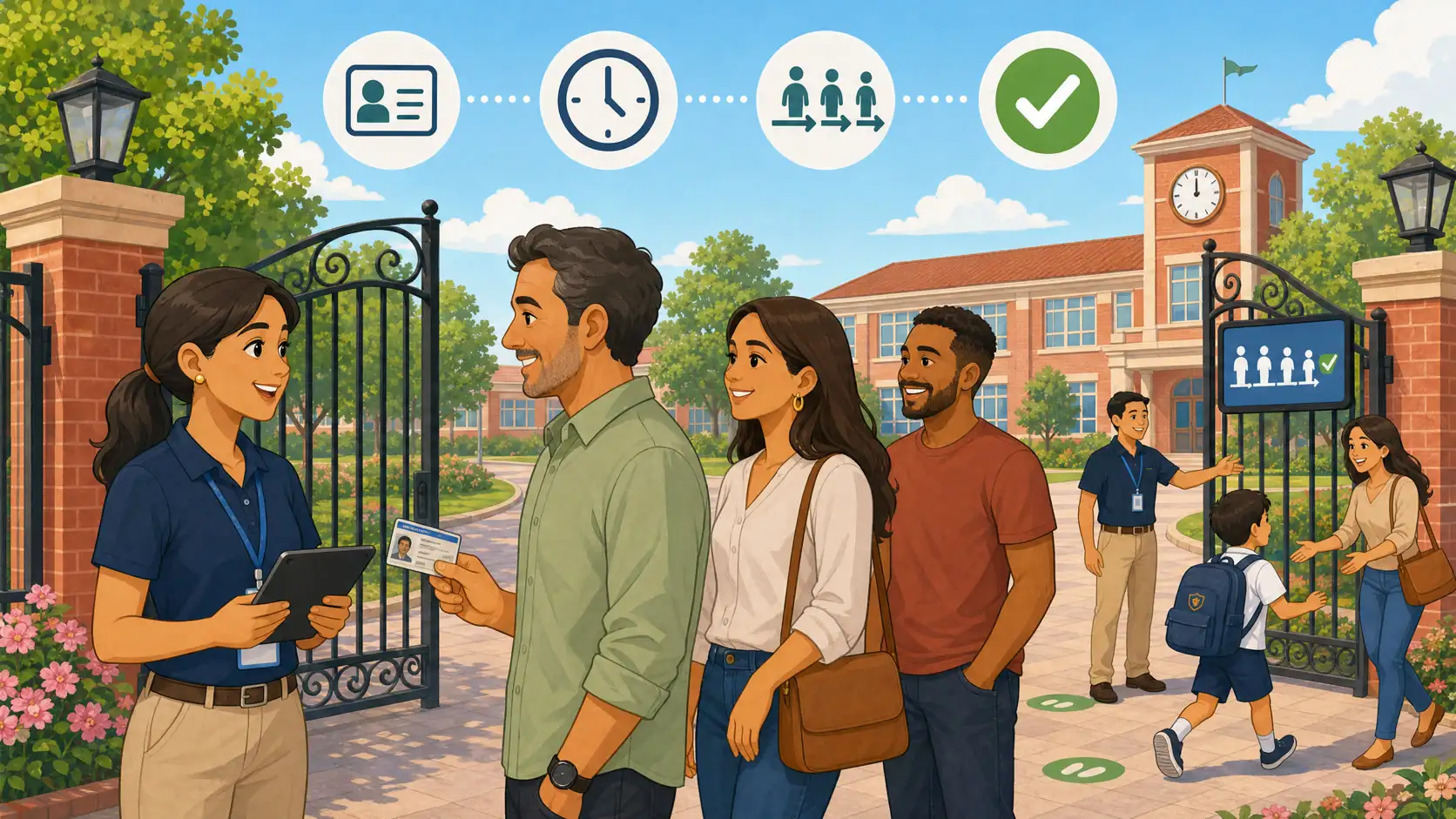
When a school decides to digitize its dismissal process, the first question is rarely "which system should we hire?" The first question is: "doesn't our school management system already cover this?"
Sometimes it does. Almost never sufficiently.
The difference between a generic "gate control" module and a system built specifically for dismissal management is the difference between a tool that covers the general case and one that was built for the specific scenarios where schools actually fail.
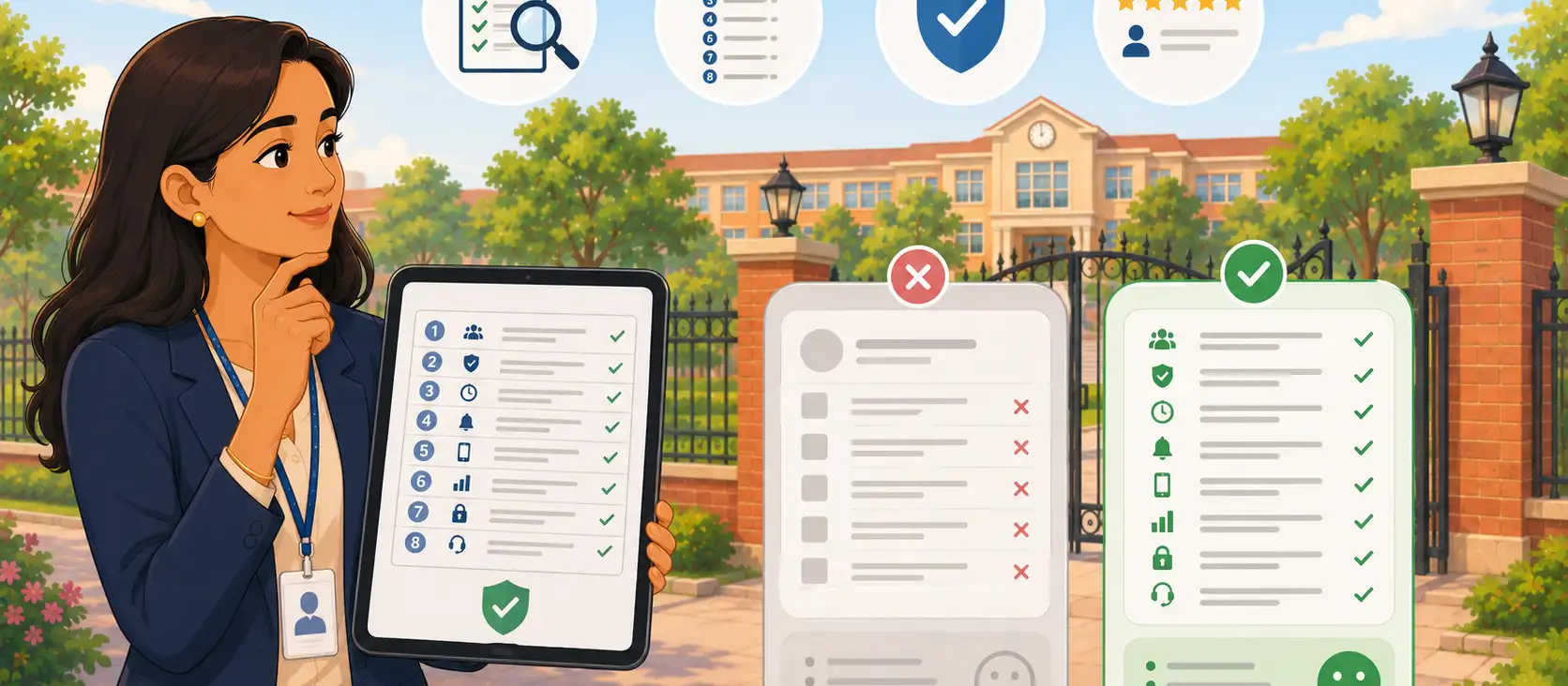
This guide presents the 8 criteria your school should use to evaluate any system — including what you already have today.
1. Was the system built specifically for student dismissal?
This is the knockout question. Generic school management systems cover finance, academics, communications, and frequently offer a gate module as a complement. That module was designed for the average case — not for the scenarios where security is actually tested.
Ask the vendor: "What percentage of your product team is dedicated to the dismissal and authorization feature?" The answer will reveal a great deal about the real depth of the solution.
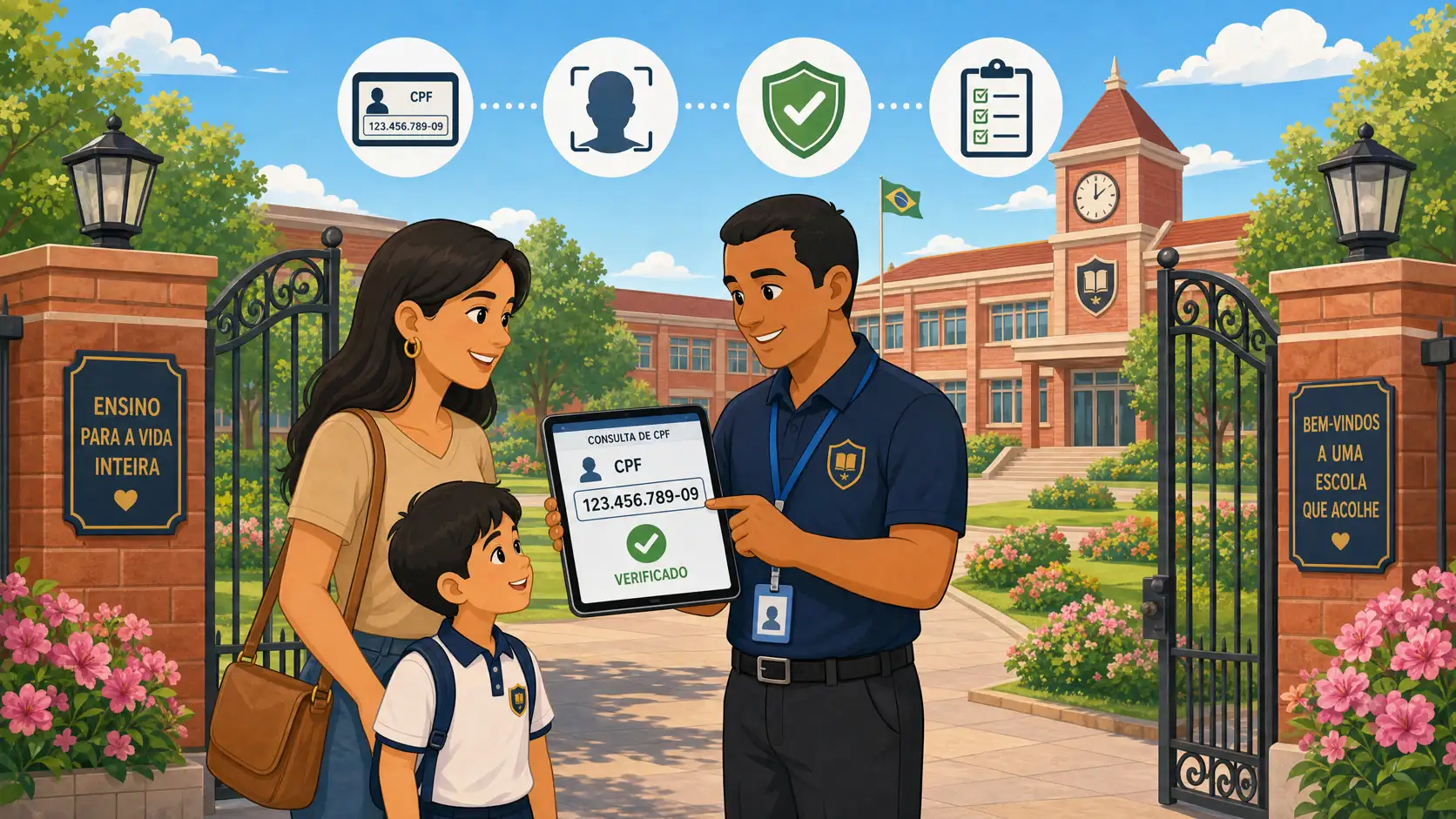
2. Does identity verification use a photo?
Verifying a name is not verifying an identity. A secure authorization system must allow gate staff to compare the face of the person who arrived with the photo registered by the guardian — without depending on the memory of whoever is on duty.
If the system doesn't offer photo-based verification as a core feature (not as a text field where someone describes their appearance), the process still depends on human judgment at the most critical moment.
3. How do one-time authorizations work?
Standing authorizations — regular parents and guardians — are the easy part. The real test of a system is how it handles one-time pickups: grandma picking up just today, a driver for one day, a neighbor in an emergency.
The system must allow the guardian to issue a one-time authorization with photo identification of the authorized person, with a defined date and time validity, arriving at the gate before the person does — without depending on a call or manual message to the office. Temporary QR codes with defined validity are the most robust solution for this scenario.
4. Does the process work without the regular gate guard?
If the system depends on someone "knowing" the families to work well, it's not a system — it's a technology support for a process that is still fundamentally human.
The criterion is simple: can a staff member who has never stood at your school's gate operate the dismissal process with the same level of security as the regular guard? If the answer is no, the resilience problem has not been solved.
5. What record does each dismissal generate?
An adequate system automatically generates, for each student dismissal: the identity of the guardian who picked up, the time, the staff member who approved the release, and a digital confirmation. This record must be searchable at any time, by student name or by date.
Ask the vendor: "If I needed today the record of all dismissals for a specific student over the last 60 days, how long would it take to generate that report?" The answer reveals whether the system was designed for real auditing or just for daily operations.
6. Is the system LGPD-compliant?
Data from underage students is sensitive data under Brazil's General Data Protection Law. This imposes specific obligations on the data controller — which, in the gate context, is the school.
Assess: where is the data stored (national or international server?), who has access, what is the retention period, and how is data deleted when a student leaves the school. Request the vendor's Data Protection Impact Report (RIPD) or equivalent documentation. Systems that can't answer these questions clearly are a liability, not an asset.
7. What is the actual implementation timeline?
Vendors frequently talk about "simple implementation" without specifying what that means in practice. Ask: how many days between contract signing and the first day of real gate operation? What needs to be configured? Who handles the initial registration of students and guardians?
For a dismissal system, implementations taking more than two weeks generally indicate unforeseen complexity — or lack of vendor priority in your onboarding.
8. Does support operate during gate hours?
Gate incidents happen between 11:30 AM and 6:00 PM — not during standard business hours. If technical support is only available from 9 AM to 5 PM on weekdays, it will be absent precisely when you need it.
Ask what the support channel is, the guaranteed response time, and whether there is coverage during peak gate operating hours. Email support with a 48-hour SLA doesn't serve a real-time gate situation.
What These Criteria Reveal
None of the above criteria is an unusual requirement. These are basic requirements for a system that will operate in a context of real legal liability.
If the system you're evaluating — including modules from your current ERP — doesn't meet most of these points, you're likely looking at a solution built for the average case, not for the scenarios where security is truly tested.
Kidsflow was developed with exclusive focus on student dismissal and authorization management. Each of the 8 criteria above was a project requirement from the start — not an afterthought.
Want to evaluate Kidsflow against these criteria? Schedule a 20-minute demo and ask the questions directly to the team. We answer every one of them — with real-world examples.
Frequently Asked Questions
Why don't generic school management systems handle student dismissal well? Generalist systems are built to cover the maximum number of features at the lowest maintenance cost — which results in modules that serve the average case but were not designed for exception scenarios. Dismissal management has critical specificities: one-time authorizations with photo identification, real-time alerts for unauthorized individuals, auditable records per student, and specific LGPD compliance for minors' data. These features require product focus that generalist systems rarely sustain.
Is it possible to integrate Kidsflow with the school management system we already use? Yes. Kidsflow offers integrations with the main school management systems in the Brazilian market for importing student and guardian registration data — which eliminates the need for duplicate manual registration. The integration is configured during implementation. To verify compatibility with your school's specific system, the ideal is to confirm with the Kidsflow commercial team before contracting.
What is the difference between access control and student dismissal control? Access control is the process of managing who enters and exits the school's physical space — frequently associated with turnstiles, cameras, and electronic gates. Student dismissal control is more specific: it involves ensuring that each child is released only to individuals previously authorized by the legal guardians, with an auditable record of each occurrence. A physical access control system does not replace a dismissal authorization system — they are complementary layers of security.
How do you evaluate the reputation and stability of a school software vendor? Beyond the technical criteria, evaluate: how long the vendor has operated in this segment, how many schools actively use the system, whether it's possible to speak with reference clients before contracting, and what the support and update policy is. Established vendors have a verifiable track record of updates and documented case studies. For a system that will operate in a critical security process, vendor stability is as important as product quality.
Does the system need internet access to work at the gate? Cloud-based systems like Kidsflow require internet connectivity to operate in real time — which includes syncing one-time authorizations and generating dismissal records. It's important to assess connection quality at the school gate before implementation. For cases of connection instability, verify with the vendor which features operate in offline mode and how data syncs when the connection is restored.
How much does a specialized dismissal management system cost compared to an ERP module? The gate module in a school ERP is frequently already included in the existing contract — which creates the perception that it's "free." But zero cost doesn't mean zero risk value: a module that doesn't meet security and audit criteria still exposes the school legally. The cost of a specialized system like Kidsflow should be evaluated against the cost of the current process (labor, rework, legal risk) — not against the price of the generic module already contracted.