2026 World Cup at Schools: How to Manage Early Pickups, Gate Chaos and Overtime Hours with Intelligence
· 6 min read
The 2026 FIFA World Cup will be held in the United States, Canada, and Mexico starting in June — and Brazil, as always, stops everything to watch. But unlike a national holiday, the World Cup does not shut down schools in an organized way. It creates something far harder to manage: unpredictability.
Families deciding at the last minute to watch the game with their children. Parents showing up outside scheduled pickup hours. Groups of guardians crowding the school gate. An overwhelmed front desk. A WhatsApp authorization message sent at 1:47 PM for a game that kicks off at 3:00 PM. And in the middle of it all, a staff trying to keep the school day running normally.
For schools without a digital process, the World Cup turns into chaos. For schools that do, it is just another well-managed day.
What the World Cup Changes in the School Routine
Brazil's matches at the 2026 World Cup will be played at times that vary according to US time zones — and many of them will fall during school hours. This creates a dynamic that every school needs to anticipate:
Mass early pickups with no advance notice. Families who had not planned to pick up their child early make that decision hours — or minutes — before the game. The communication arrives via WhatsApp, a call to the front desk, or simply a guardian showing up at the gate unannounced.
Surge in one-time pickup authorizations. Grandparents, uncles, family friends — everyone wants to be together to watch the game. The number of authorizations for people who are not the regular guardians spikes on game days.
Crowding at the school gate. When multiple families arrive at the same time with no staggering, lines form quickly. The festive, anxious atmosphere of World Cup days amplifies the operational chaos.
Increased margin for error. With staff also excited about the game, the pressure of the crowd, and a higher-than-normal volume of out-of-schedule pickups, the probability of mistakes in authorization control rises. And errors in student release have real legal consequences — regardless of whether it is a World Cup day or not.
Untracked overtime hours. The other side of the coin: students whose guardians were delayed because of pre-game traffic or simply forgot are kept at school beyond their scheduled pickup time. Without digital tracking, those hours simply disappear — no record, no billing.
Why Manual Processes Fail on Game Days
Student pickup on World Cup game days is exactly the scenario that exposes the limits of manual processes:
The printed authorization list was not updated to include the uncle picking up today
The mom's WhatsApp message authorizing the grandmother did not reach the gate in time
The doorman is overwhelmed by the line and releases a child without proper verification
The secretary is scribbling last-minute authorizations on loose paper
No one knows exactly what time each child left
Each of these is a risk. On World Cup days, they all happen simultaneously.
How Kidsflow Resolves Game Day Chaos
Kidsflow was built so that the student release process works reliably every day — including the days when everything conspires toward chaos.
One-time authorizations with temporary QR codes
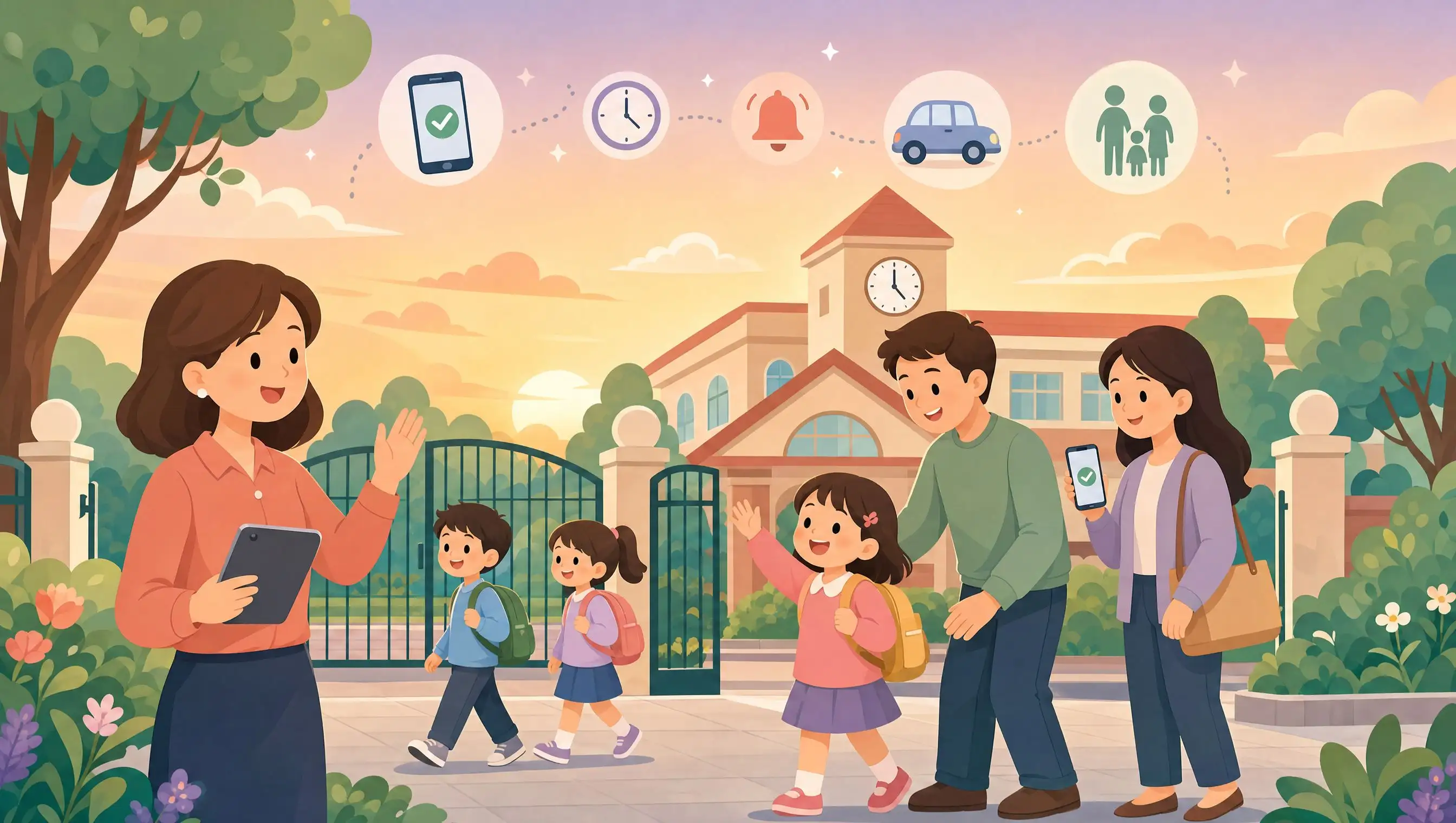
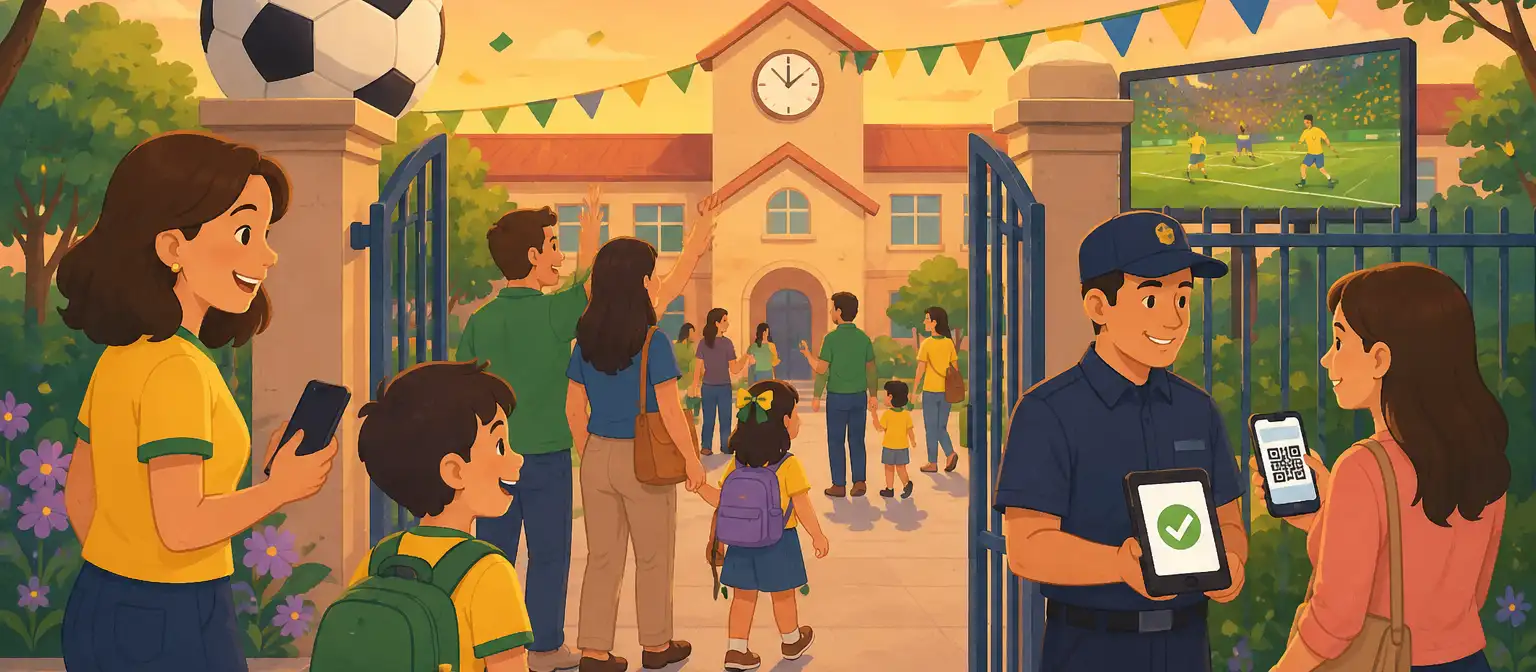
A family that decides at the last minute that grandpa will pick up the kids today does not need to call the school. Through the app, they generate a QR code with a specific date and time validity — which grandpa presents at the gate and staff scans in seconds. Formal process. Automatic record. No WhatsApp needed.
Real-time queue management panel
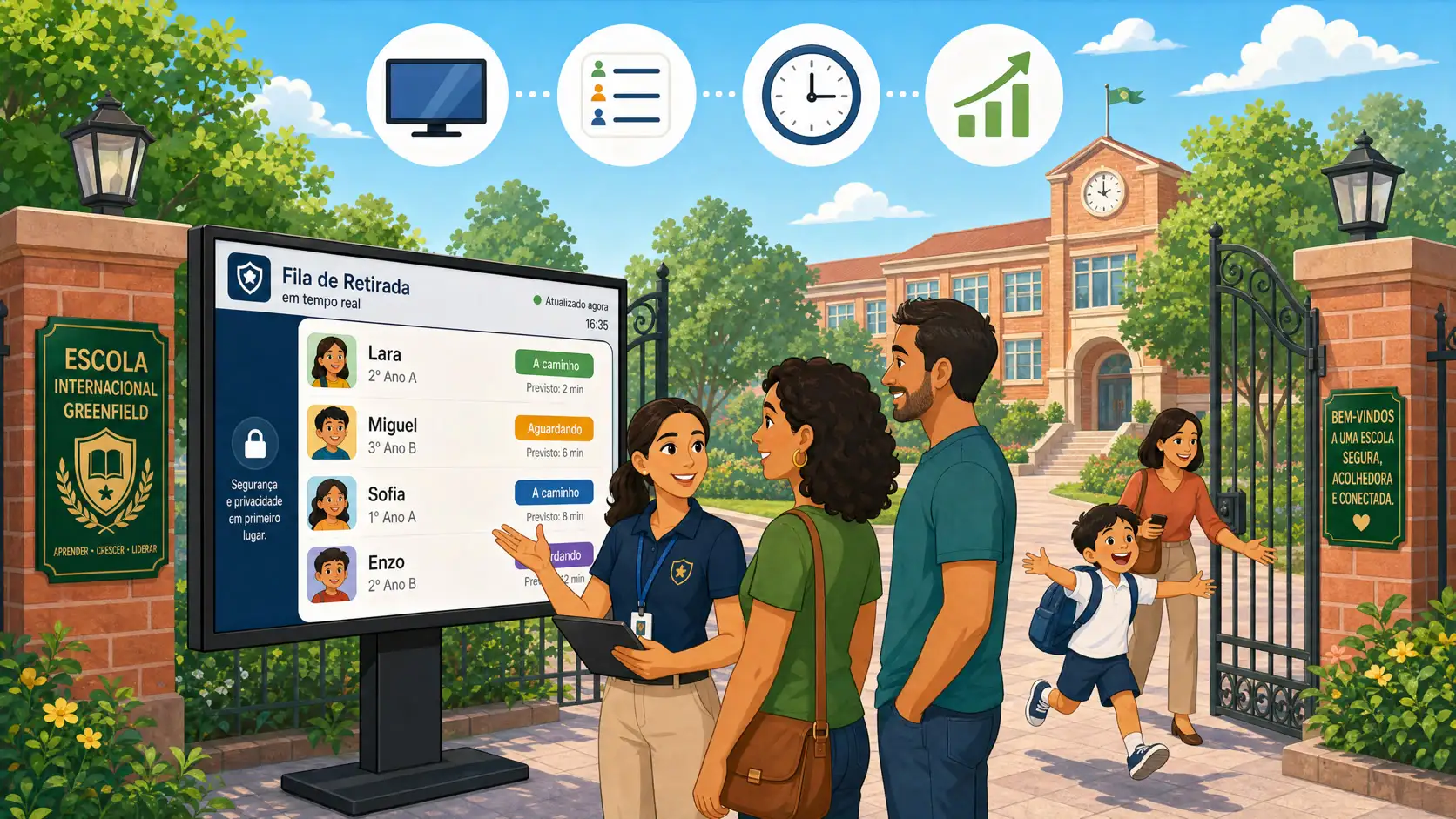
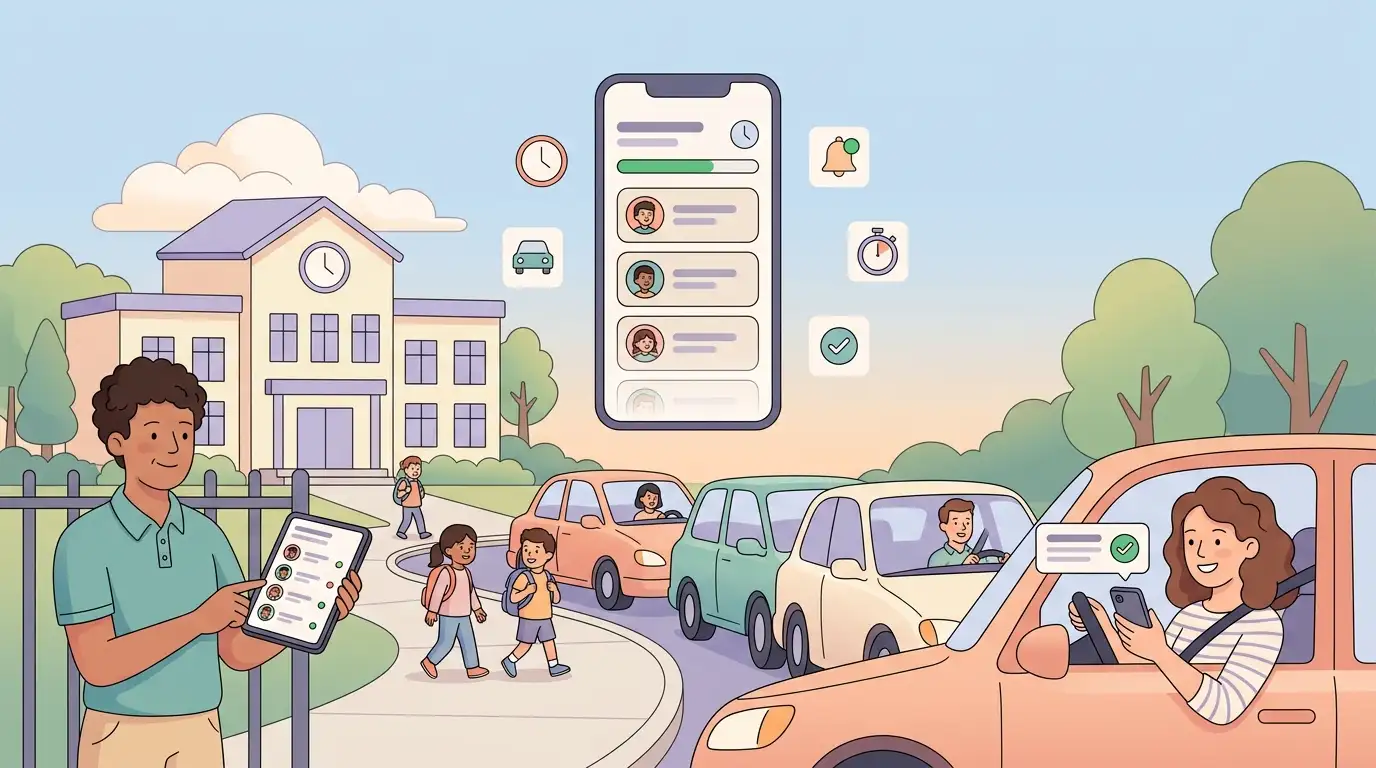
With digital check-in, the family notifies the school when they are leaving home. The school sees the real-time queue and calls children in order of arrival — even with higher-than-normal volume. Gate congestion drops even on the busiest days.
Auditable record of every release
Every child who leaves, at any time, generates an automatic record: who picked them up, when, with what authorization, and who confirmed at the gate. On a World Cup day — with high volume and a pressured team — this record guarantees that no release goes untracked.
New Feature: Financial Report of Overtime Hours
This is one of the most relevant additions for school financial management — and it makes even more sense during the World Cup period.
Kidsflow now tracks the actual release time of each student and compares it to the scheduled pickup time. The difference is automatically calculated as overtime. At the end of the period, the platform generates a billing report with all additional hours per student — ready to be used by the school's financial team.
In practice, for World Cup days:
Early pickup: recorded with the exact time — useful data for attendance and academic control
Late pickup: every minute of overtime is logged and accumulated per student
Monthly report: management receives a consolidated view of overtime hours with student name, date, scheduled time, actual time, and total to bill
Schools that previously lost revenue from lack of overtime tracking now have visibility and a formal billing tool — no manual process, no spreadsheets, no guesswork.
For a school with 200 students where 15% stay beyond scheduled hours on World Cup days, the untracked financial impact can be significant across a full tournament month. With Kidsflow, every minute is recorded and billed correctly.
The World Cup as an Opportunity to Demonstrate Strong Management
Schools that manage World Cup days well — with an organized process, clear communication, and zero incidents — come out stronger. Families notice that the school functions even under pressure. That is a retention differentiator.
Schools that improvise on game days — with an overwhelmed front desk, WhatsApp as an authorization channel, and no record of who left with whom — expose exactly the weaknesses in their management at the moment when the most people are paying attention.
The World Cup is an operational stress test. With Kidsflow, you pass.
Frequently Asked Questions (FAQ)
Is the school required to release students to watch World Cup games?
There is no legal obligation to release students for the games — unless the state or municipal government declares a faculty holiday. But many schools choose to offer schedule flexibility upon formal request from guardians. Regardless of the policy adopted, the release process must be controlled and documented.
How do you manage last-minute authorizations on game days?
The safest solution is a formal digital channel — like Kidsflow's temporary QR code — that allows the guardian to authorize a specific person through the app, with date and time validity, without needing to call the school. The gate staff scans and validates in seconds, with automatic records.
Does Kidsflow automatically charge for overtime hours?
Kidsflow tracks overtime hours and generates the billing report. The actual billing is handled by the school through its usual financial process — Kidsflow provides the precise, documented data to support the charge.
How do you avoid gate congestion on World Cup game days?
Digital family check-in combined with staggered release schedules. The family notifies the school when they are leaving home — the school sees the real-time queue and calls children in order of arrival, even with above-normal volume.
How do you quickly communicate schedule changes to all families on game days?
Formal communication channels integrated into the school app ensure the message reaches all families in a documented and trackable way — without relying on WhatsApp groups that are not always read in time.
Learn more about Kidsflow at kidsflow.com.br and AlunoTV at alunotv.com.br