Full-Day School: Benefits, Challenges, and How to Organize with Quality
· 5 min read

Full-day schooling has moved from exception to trend — becoming one of the top demands from families in major cities worldwide. The extended school day has gained momentum in both public and private education systems.
For private school administrators, the decision to adopt or expand full-day programs involves a set of pedagogical, operational, and financial variables that need careful planning. This guide presents the state of the art in full-day education, research-proven benefits, real operational challenges, and how technology can be an ally in this journey.
What Is Full-Day School
Full-day education goes beyond extending school hours — it presupposes a concept of human development that integrates intellectual, physical, emotional, cultural, and social dimensions. Full-day school is typically defined as offering a school day of 7 hours or more, with a pedagogical project that articulates regular activities with complementary ones.
In the private sector, full-day programs typically include: regular instruction, extracurricular activities (sports, arts, languages, robotics), tutoring and academic support, guided study spaces, and meals. The advantage of private schools lies in their ability to customize the extended curriculum according to their pedagogical approach.
Research-Proven Benefits
Academic Performance
Research with full-day schools has shown average gains equivalent to approximately 6 extra months of learning per year. In the private sector, gains tend to be even greater given the higher control over the quality of complementary activities.
Social-Emotional Development
Extended time at school creates more opportunities for developing social-emotional competencies: more hours of group interaction, more collaborative activities, more moments of adult-guided emotional regulation. Research shows a positive correlation between full-day schooling and emotional wellbeing indicators.
Social Protection
For dual-income families — who represent the majority in mid- to high-range private schools — full-day school solves the challenge of child supervision during business hours. This practical benefit is frequently cited as the primary motivator for choosing full-day programs.
Market insight: Research shows that a majority of middle-class families consider full-day program availability a relevant or decisive factor in school choice. For private schools, it's a growing competitive differentiator.
Key Operational Challenges
Managing Entry and Dismissal Flow
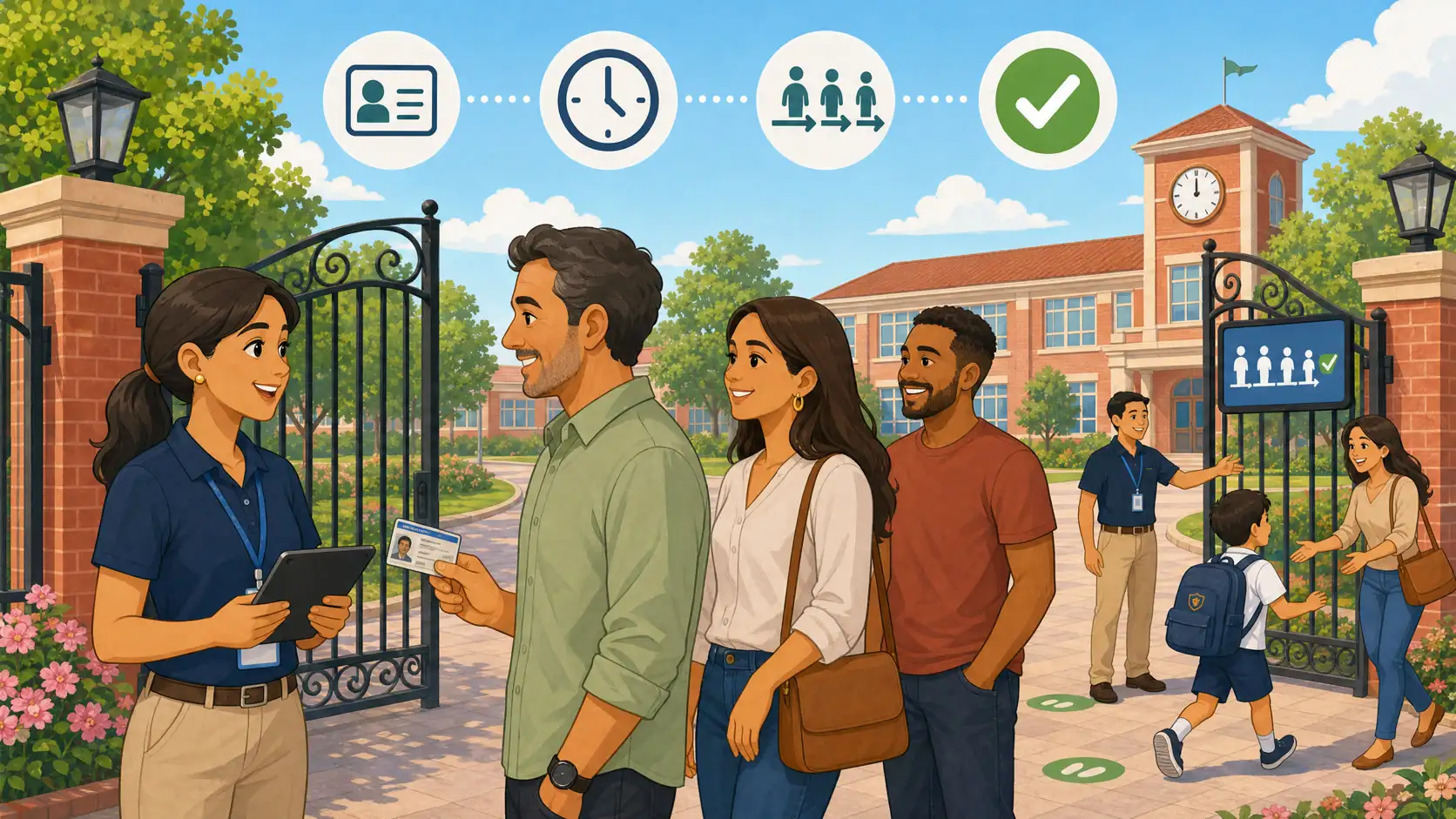
With an extended day, the school needs to manage multiple entry and exit moments throughout the day: morning arrival, regular day dismissal for non-full-day students, return after lunch, and afternoon dismissal. Each of these moments is a point of operational and safety risk that needs a defined protocol.
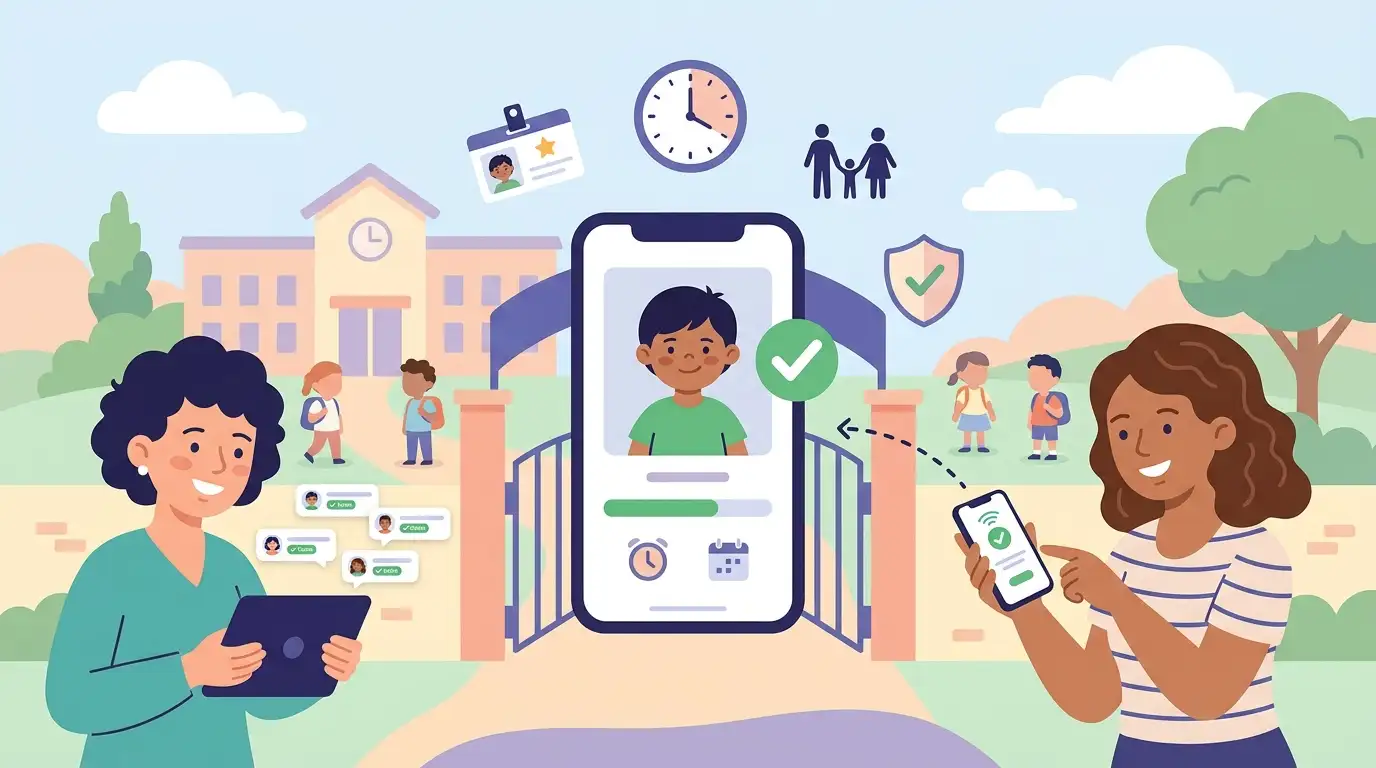
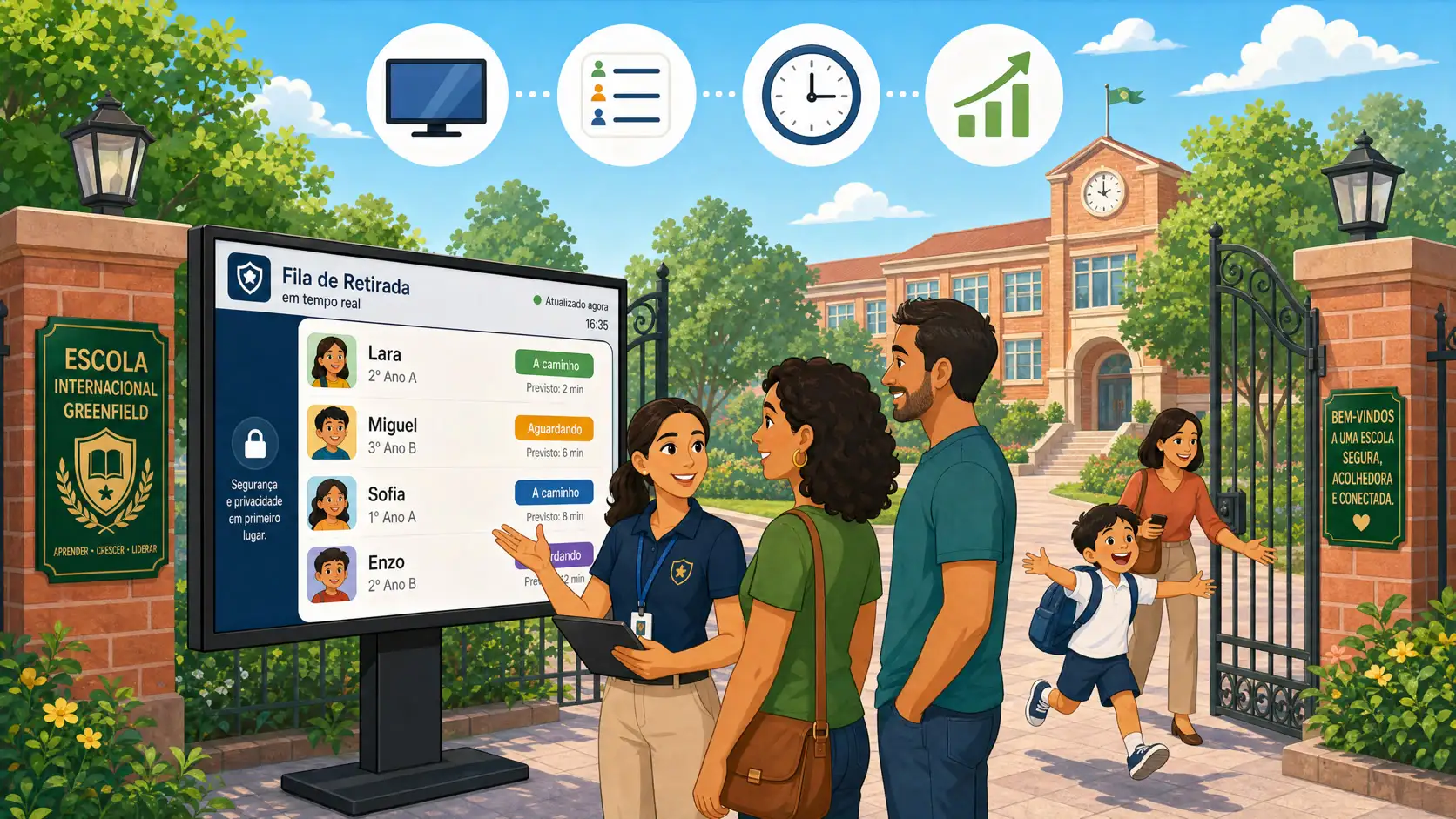
Kidsflow solves exactly this: it digitizes dismissal authorizations for each shift and time slot, allows guardians to update in real time who will pick up the child at each moment of the day, and generates an auditable record of each dismissal — regardless of how many dismissals the school handles per day. More dismissals mean more efficiency and security are needed. Learn more at www.kidsflow.com.br.
Staff and Infrastructure Management
Full-day programs require more teachers, more monitors, more physical spaces, and more meals. Managing an 8-hour school is significantly more complex than a 4-hour school — and operational costs grow proportionally. Financial and HR planning must be detailed before expansion.
Quality of Complementary Activities
The biggest risk of full-day programs is turning extra hours into a "student storage" — activities without pedagogical intent that tire without developing. The quality of complementary activities is as important as regular instruction and must be planned with the same curricular rigor.
The Role of Technology in Full-Day Schools
Full-day schools that operate efficiently use technology to automate operational processes — freeing the pedagogical team to focus on what truly matters. Adaptive learning platforms for guided study hours, family communication systems for multiple daily touchpoints, and flow management tools like Kidsflow are essential components of a well-structured full-day operation.
AlunoTV (www.alunotv.com.br) plays an especially relevant role in full-day contexts: with children at school for 8 or 9 hours, the need for transparency and family connection is even greater. Live cameras with access control allow guardians to see moments of their children's day — reducing prolonged separation anxiety and strengthening trust in the school.
Frequently Asked Questions (FAQ)
What is the difference between full-day school and extended hours?
Extended hours simply keeps students longer, using the same regular day model. Full-day school presupposes an integrated pedagogical project, where complementary activities have clear educational intent and articulate with the regular curriculum. The difference is in pedagogical conception, not just hours.
How much does it cost to implement full-day programs in a private school?
The cost varies significantly depending on existing infrastructure, student count, and chosen pedagogical model. On average, private schools expanding to full-day report a 30 to 50% increase in per-student operational costs (staff, meals, infrastructure). The counterpart is the potential for increased revenue through differentiated tuition and higher student retention rates.
Does a full-day school need special authorization?
Requirements vary by jurisdiction. Generally, private schools follow national education standards and state-level guidelines. The school typically needs its extended day pedagogical project approved by the relevant education authority and must ensure the infrastructure and staffing conditions required by regulations.
How to organize student dismissal in a full-day school?
With multiple dismissal times throughout the day, full-day schools need a digital authorization system that allows: different authorized persons for different time slots, real-time updates by guardians, quick verification at the gate without manual lookup, and auditable records of each dismissal. Kidsflow was designed exactly for this complexity — each student can have different configurations for each shift of the day.
How to involve families in a full-day school?
With children at school for 8 to 9 hours, family involvement must be intentional and facilitated by technology. Proactive communication about daily activities, photo documentation of moments, notifications about arrivals and dismissals, and the ability to follow moments live — as AlunoTV offers — are elements that build trust and partnership between school and family, even with the long day.