Is the school responsible for students off campus? What the law covers
· 13 min read
It depends on the scenario. After an authorized handoff at the gate — a legal guardian or a listed authorized person, identity checked, a log kept — custody of the child typically transfers to the family. Your school is no longer the guardian of that student on the way home.
That does not mean the institution is always off the hook "off campus". The school still answers when it organizes or contracts an activity away from campus (field trip, excursion, educational visit), when it provides or contracts school transport, when it keeps the student in extra hours on the premises, or when the guardian has not yet picked the child up after the bell. The test is not the street address. It is whether the student is still under the school's custody, supervision and authority.
The question mixes different facts. Treating them as one problem produces lawsuits — and incomplete protocols. What happens at the gate is already in the dismissal-security article. The focus here is afterwards: what remains the school's even far from campus.
What the law covers: Civil Code 932/933, ECA and CDC
Three statutes overlap. None of them uses the phrase "off campus". All of them speak of custody, supervision, service and a duty of protection.
Civil Code: strict liability while custody lasts
Article 932, item IV, of the Civil Code (Law 10.406/2002) lists among those liable for civil redress "the owners of hotels, inns, houses or establishments where people are lodged for money, even for educational purposes, for their guests, residents and pupils".
Article 933 closes the regime: the persons listed in the previous article, "even if there is no fault on their part, shall answer for the acts committed by the third parties referred to therein".
For a private fee-paying school: while the student is under its custody and supervision, liability is strict. The family needs the damage and the link to the period when the school was the guardian — not proof of intent. The school must show adequate care or a defense (exclusive fault of the victim or a third party, external fortuitous event).
The item refers to an establishment "where people are lodged for money". Classic doctrine applies 932, IV, to private paid schools. Public schools answer under the Constitution, art. 37, § 6 (strict liability of the State). In both cases, the duty of custody does not stop at the wall.
CDC: the private school is a service provider
Article 14 of the Consumer Defense Code (Law 8.078/1990) provides that a service supplier is liable, regardless of fault, for damage caused to consumers by defects in the service — and by insufficient or inadequate information about risks.
In this frame, your private school is a supplier; student and family are consumers. A service is defective when it does not offer the safety that may be expected (art. 14, § 1). Defenses: the defect does not exist, or exclusive fault of the consumer or a third party (§ 3).
When the school hires a bus, a park, a hotel or monitors, it joins the supply chain. CDC arts. 7, sole paragraph, and 25, § 1, impose solidary liability: the family may sue the school, the carrier, or both. Recourse against the vendor (Civil Code art. 934) does not remove the duty to the family.
CDC art. 25 forbids a clause that exempts or attenuates the duty to indemnify. Art. 51, I, makes null clauses that exempt the supplier or imply a waiver of rights. A trip authorization that tries to "release the school from any damage" informs and records consent. It is not a non-indemnity clause.
ECA: a duty to prevent, not only to react
The Child and Adolescent Statute (Law 8.069/1990) has no article on "field-trip liability". It has duties a school does not ignore:
- Art. 4: duty of the family, the community, society and the public authorities to ensure, with absolute priority, rights to life, health, education, dignity and respect. Priority includes protection and rescue in any circumstances.
- Art. 5: no child or adolescent shall be subjected to neglect, discrimination, exploitation, violence, cruelty or oppression.
- Art. 17: the right to respect consists in the inviolability of physical, psychological and moral integrity.
- Art. 70: "It is everyone's duty to prevent the occurrence of threats or violations of the rights of the child and adolescent."
Prevent. Not only file a police report afterwards. A trip protocol with no attendance list, no adult-to-child ratio and no plan for a missing headcount is foreseeable omission — not an "unforeseeable event".
Off campus is not a single scenario
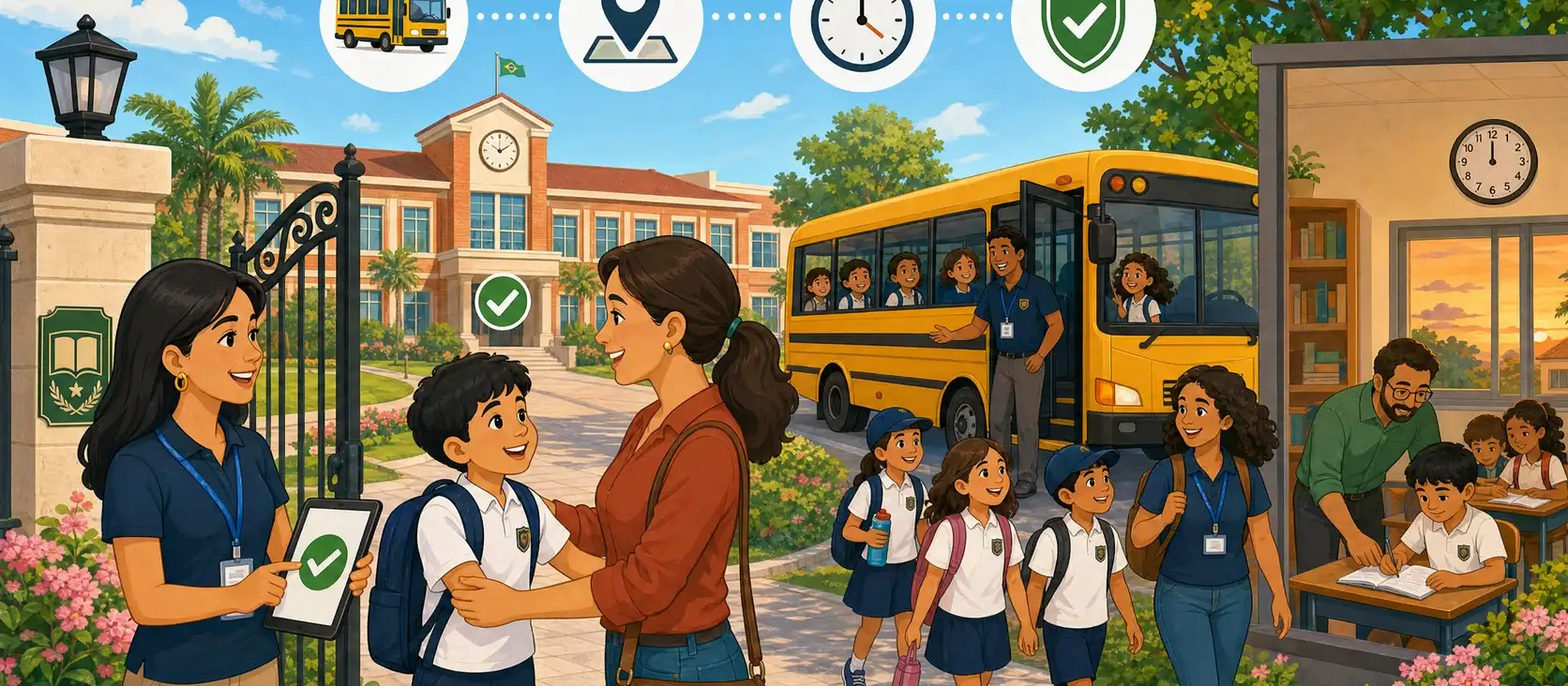
Before you write a protocol, split the facts. "Off campus" covers at least six situations, with different legal answers.
School-organized field trip, excursion or educational visit. Custody continues from leaving campus until return, even if participation is optional.
School-provided or school-contracted transport. The school is in the chain (CDC). It needs a contract, vehicle and driver requirements, and a boarding log.
Transport hired independently by the family (private van). The school is not, as a rule, the carrier. It still answers for the handoff to the driver: authorization, identity, log.
Extra hours, after-school, or a student still on site after the bell. While the child remains on school premises, custody has not ended. A late parent does not shift the risk onto the child.
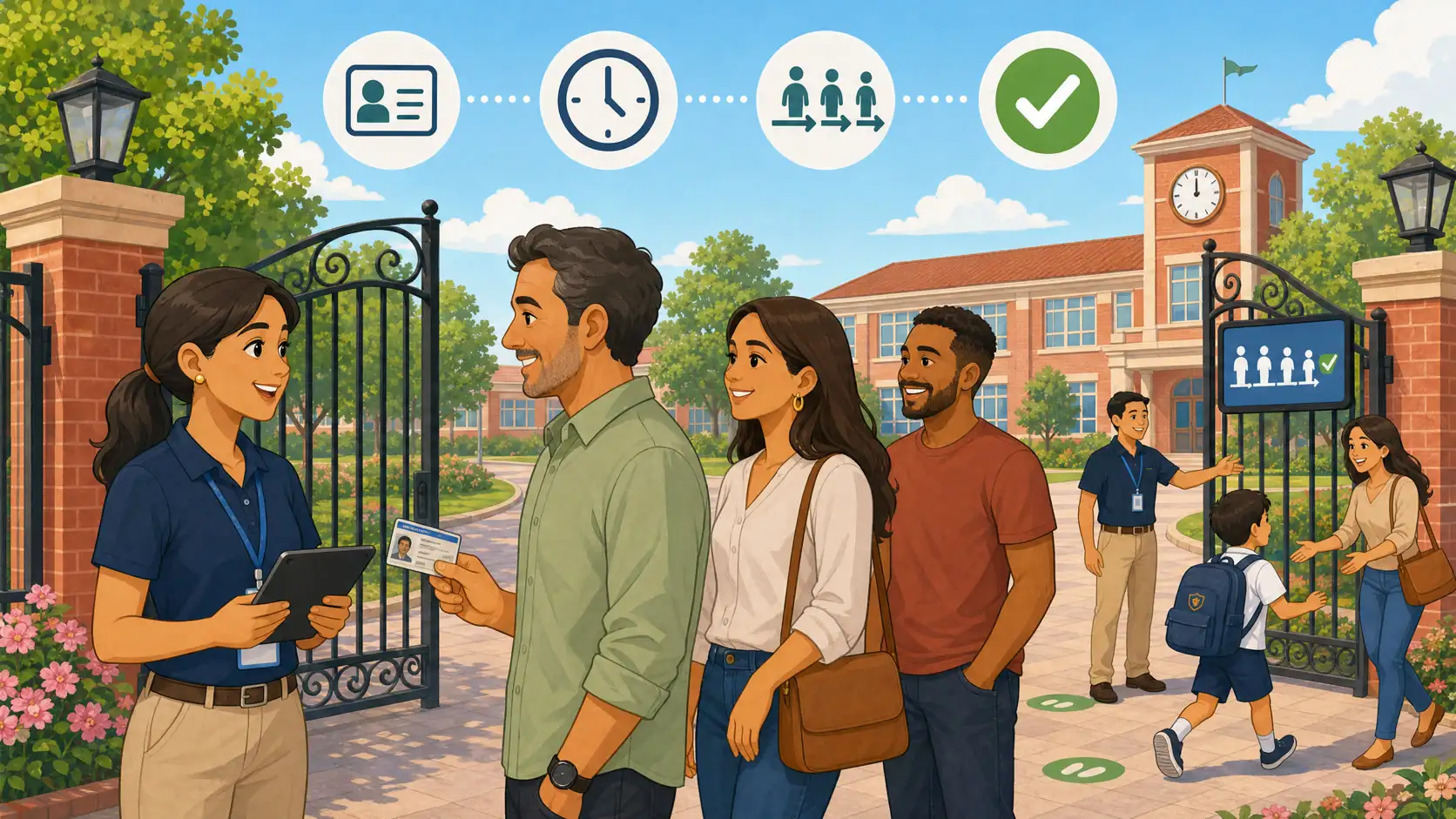
Authorized pickup at the gate. Handoff to a guardian or authorized person, with a check and a log: custody passes to the family. The only point in this article where a dismissal-authorization system belongs.
A student who leaves alone, on foot or by public transport. That is not "handoff to no one". It is specific written authorization, with age and itinerary rules in school policy. Without that, release is a gap in custody, not a routine.
If your team uses the same form for the family van, a field trip and walking home, the process is wrong.
Field trips and excursions: custody travels with the student
When your school organizes the trip, campus is no longer the limit of the duty. The duty of safety follows the student under its supervision.
In February 2026, the STJ 4th Panel held a private school liable for the death of a 17-year-old student on an educational excursion and reinstated BRL 1 million in damages. The reporting judge recorded that the school assumes the position of guarantor of the student's integrity from the start of the journey until return. Failures of supervision — including delay in noticing the disappearance — were the causal link, even though staff did not inflict the direct cause. Coverage: Migalhas (REsp 2.240.249, as published there).
The facts are extreme. The operational lesson is not. If the school calls the trip, organizes it, charges for it, hires the bus and sets the program, it cannot treat time "at the park" or "at the hotel" as family time.
Before leaving: activity-specific authorization (destination, times, transport, health) — not a generic "all trips this year" form; a nominal list at departure, transfers and return; a written adult-to-child ratio calibrated to the site; contracts for bus, venue and insurance; an incident plan with a time to declare a student missing.
Parental authorization is a condition to take part. It is not a waiver. If the form says "the school is not responsible for accidents", take that line to the school's lawyer: it creates false comfort and will not hold up in court.
School transport: whoever hires the service is in the chain
There are two designs. Mixing them at the gate is the most common error.
The school offers or contracts the van
If tuition, enrollment or a side contract includes transport — or if the school chooses the company, sets the route and charges — it is a supplier, alone or in a chain. A defect in the vehicle, driver or route is a defect in the service. The family does not have to split, at the first step, the school's fault and the company's.
Minimum: written contract; legal requirements for vehicle and driver; boarding and alighting lists; a supervised meeting point; a rule on who may collect the student if drop-off is not at home.
The family hires the van independently
Here the school is not, as a rule, the carrier. The contract is between family and driver. That does not erase the handoff.
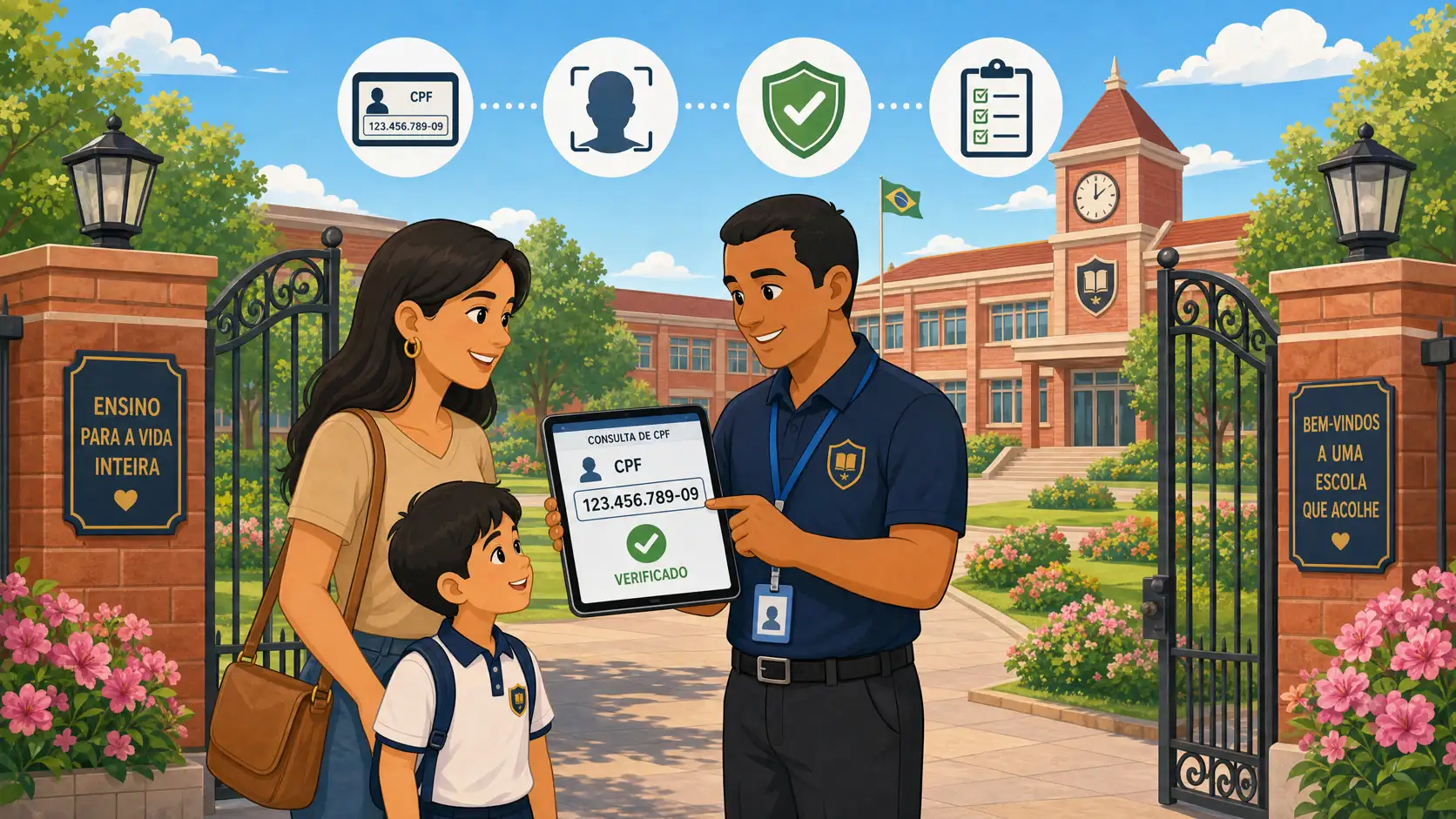
The driver is, at the gate, an authorized person like any other: on the child's register, with photo, ID, validity set by the guardian. The school answers if it hands the child to someone who was not authorized, or if it later cannot say who took them. It does not, as a rule, answer for an accident on the private van's route — unless it endorsed the service or failed at handoff.
In practice: a paper taped to the gate glass listing "Dona X's van drivers" is not a register. It is a note.
Extra hours and the student still there after the bell
The bell ends the class. It does not end custody.
While the student is in the yard, at the office, in the waiting area or in the school's after-school program, supervision continues. A late guardian does not shift the risk onto the child.
Define the minute after the bell: who supervises, where they wait, how the family is contacted. Log every contact attempt. Repeated lateness leaves operations and enters coordination — with ECA reporting duties if there is an indication of neglect (arts. 13 and 56). Extra activities on campus (sport, tutoring, workshop) are an extension of the service: outsourcing the teacher does not outsource custody at that activity's exit.
The moment custody ends: pickup at the gate
This is the only section of this article that returns to the gate — and it should, because that is where custody normally ends.
The rule is simple to write and hard at peak: hand over only to a legal guardian or an authorized person, with an identity check and a record of who collected, when, and who released. Once that is done, custody passes to the family. The journey is, as a rule, no longer the school's — unless the handoff itself failed.
That is different from "the student left alone". Releasing a child or adolescent to walk, take a bus or a ride-hail app, without written authorization and without an age policy, is not a transfer of custody: it is abandoning the duty of supervision at the last metre.
Photo register, traceable one-off authorization and an auditable log are in the dismissal-security article and the authorization-control guide. WhatsApp is not a protocol. Controlling who enters the building also does not replace controlling who leaves with the student — different layers, as in the access-control guide.
Kidsflow belongs exactly here, and only here: at the moment of handoff. It is not a transport system, it does not run field trips, and it does not replace a van contract. It answers the question the school must be able to answer later: who took this child, under which authorization, at what time. Without that record, even a "correct" exit is indemonstrable.
An auditable protocol: what to keep (and what not to improvise)
A protocol that lives only in the coordinator's head is not a protocol. Under strict liability, the burden of showing care is the school's.
Off campus: activity-specific authorization per student; attendance list at departure, transfers and return; adult-to-child ratio with a planned substitute; contracts for transport, venue and insurance; emergency contacts available offline; incident report the same day.
Transport: a documentary split between school van and family van; authorized driver with photo in the same gate flow; boarding log when transport is the school's.
Extra hours and late pickup: a written, communicated time when regular custody ends; a supervised waiting place; a contact log with the family.
The gate (when custody ends): authorized-person register with photo; identity check, not name-only; log of who collected, time and staff member who released; formal one-off authorization — not a group-chat note.
None of this requires field-trip software. It requires an owner of the process and a record that survives the usual staff member being off.
Want to see how to log the gate handoff — the moment custody ends? Book a 20-minute demo. We walk through authorization, photo check and an auditable log. No commitment.
Frequently asked questions
Is the school liable for the student on the way home after an authorized pickup? As a rule, no — if the handoff was to a guardian or authorized person, with a check and a log. Without that, the school remains exposed.
If the trip is optional and parents sign a waiver, is the school exempt? No. Authorization records consent. A non-indemnity clause is, as a rule, void under the CDC (arts. 25 and 51, I). A trip organized by the school remains under its custody.
Does a family-hired van shift route risk onto the school? As a rule, no. The school answers for the handoff to the authorized driver. Branding the van as "the school van" can pull the institution back into the supply chain.
May a student who walks home leave alone? Only with written guardian authorization, a school age policy and a record of the release. Without that, the school did not "respect autonomy": it failed the duty of custody. Adolescents are also under the ECA.
The bell has gone and the parent has not arrived. Has custody ended? No. While the student remains on the premises, the school is still the guardian. Define supervised waiting, logged contact attempts, and what happens if lateness becomes habitual.
Does a public school follow the same art. 932, IV regime? 932, IV speaks of an establishment where people are lodged for money and, on the usual reading, applies to private paid schools. Public schools answer under the Constitution (art. 37, § 6). The duty of custody and the ECA apply in both cases; the legal basis for damages changes.
What has the STJ said about school excursions? That the duty of supervision follows an off-campus activity organized by the school, from start to return. The 4th Panel's 2026 judgment reinforced that role as guarantor. Do not treat a field trip as family downtime.
Conclusion
The right question is not "is the school responsible off campus?". It is: at this minute, is this student still under the institution's custody?
If yes — trip, school transport, extra hours, waiting after the bell — the duty continues, with strict liability and, for private schools, the CDC. If no — authorized handoff, identity checked, log kept — custody has passed to the family. Mixing the two leaves a school with no defense and no process.
Map the six scenarios with the school's lawyer. Review trip forms that promise exemption. Split school van and family van. Close the only moment when custody should end on purpose: pickup at the gate, with a record you can produce.
This article is informational for school leaders. It is not legal advice on your school, contract, network or municipality. Consult the institution's lawyer before changing regulations, enrollment contracts or trip forms.